It's that time of year again: it's cold and dark out, you're on a break from school or work, and you are perhaps feeling like sleeping in every morning, eating Christmas cookies whenever you want, and maybe-just maybe-putting off today's workout(s) til tomorrow. (Or maybe that's just me...) Regardless, here are five tips to help you make the most of the rest of your winter break training!
1. Set yourself up for success.
When you’re at school, work or not on vacation, you know what time you’re heading to the boathouse or gym, and (usually) have a general idea of what you’re going to do when you get there. You know where your running shoes, workout clothes, water bottle and iPod are. Look ahead at your schedule between now and the end of your break and see where those good time slots are – and then mentally and physically (use your phone alarm and calendar) to schedule them in. If you’re dressed for a workout and your alarm is going off, it’s easier to get out the door and get moving – even to the workout equipment in the unheated garage – than if you’re lounging in your new Snuggie on the couch and thinking about whether today should just be your rest day.
2. Find a buddy for the hard stuff (and the easy stuff).
If you have a recommended workout plan for the break, chances are you looked at it and thought the cross-training/steady state workouts seemed do-able, but groaned when you saw the hard erg workouts. FYI: it’s much better to do these with a teammate/workout buddy if you can. When I’m home, I wake up before 5am and drive to my nearest teammate, 30 minutes away, so that I can get in at least the challenging part of the day’s workouts with a buddy. No, I don’t always want to get up early, but guess what? That’s what naps are for, and you get to take them, because you’re on break!
For cross-training off the erg, check out November Project – chances are there’s one near you that you can join for one to three weekly workouts while you’re home.
3. Be realistic.
Individual training during winter break is not usually when you are going to PR on workouts. (Although if you do PR – awesomeness! Enjoy it!) Be realistic about what you are shooting for in each workout, whether it’s heart rate, split, dumbbell weight, speed, or attention to technique. You are far more likely to continue to move towards your training and racing goals by training consistently – being able to check off every workout – than by cramming many workouts together to try to make up for lost time, or by blowing
it out on the workouts you do so that you’re forced to rest due to injury or fatigue.
Consistency isn't sexy, but it's what produces results. Set realistic goals for each workout and if you are feeling like you have more in the tank, get faster as you go.
4. Don’t throw nutrition out the window.
It’s a time-honored tradition that the holidays are meant for indulging – big meals, lots of drinking, whipped cream as a part of the food pyramid, etc. If that’s part of what makes the holidays great for you – don’t give it up! But you will enjoy those indulgences more if you plan them, but stick to good nutrition the rest of the time. If you’re going to have several drinks on New Year’s, get your Dec. 31 workout(s) in early and eat right that day before going out. Plan your schedule so that Jan. 1 can either be a rest day where you eat right, or an eat-right day with an easier workout in the late afternoon. The huge holiday breakfast at your relatives’ house will be that much more enjoyable if you haven’t also stuffed your face every other morning that week!
5. Get some good tunes!
Training mostly by yourself over the holidays can mean that
you get sick of your music really fast – but you keep listening to it because you can’t stand the terrible tunes that are being blasted by the gym/the high school rowers at your hometown club/your parents.
To that effect, here are three new playlists to help you stay motivated through the rest of your break!
Whether you're training for your very first rowing race or towards the Olympic Games, choosing great nutrition is one of the biggest ways to up your game. It's not always easy or convenient to have good foods available or incorporated into every meal and snack, but I pulled together 8 of the big ones that you really can utilize every day, along with some recipes that work for real life!
Bang for your buck, these are some of the most potent nutritional nuggets out there. Antioxidants and vitamins give berries high ANDI scores: they help protect against and process the damage you do to your muscles and body from hard workouts or a high-stress day at work.
Quick recipes:
Add your favorite berries (or whichever type is on sale at the grocery store that week!) to plain or vanilla Greek yogurt.
Add to ½ cup regular or gluten-free oats, add almonds and water or milk, and microwave for 1:30 to get a quick breakfast or pre-workout snack that will stay down but keep you fueled for hours.
Rower Power Food: Quinoa
I love this commercial. But...quinoa (KEEN-wah) can actually be really delicious, and for athletes, it's also 100% superfood. It is one of the smallest grains in the world, which is great because (getting all nerdy here) that means it has a lot of nutrient-dense outer casing compared to the amount stuff inside each grain. Translation? More proteins, fiber, and amino acids (including all 9 essential aminos) than just about any other food.
Quick recipes:
Following package instructions, cook quinoa on the stovetop with water or chicken broth. Add spices (I love garlic, a bit of onion, salt and black pepper). Eat as a side dish or a quick pre- or post-workout snack.
Cook quinoa with water and make a few cups extra. If you regularly blend pre- or post-workout shakes, add 1/2 cup or more of cooked quinoa to your shake for an extra boost of the good stuff.
This recipe (YUM!) for quinoa, kale, walnut and sweet potato goodness. Add some cooked chicken breast for an extra protein boost.
Rower Power Food: Nuts
Nuts (I’m partial to almonds and walnuts) and nut butter are awesome nutritional tools. Adding a small handful of almonds to a primarily-carb meal or piece of fruit will balance your blood sugar out and avoid hangry-ness for longer! They have good fats and protein, so a little goes a long way.
Quick recipes:
Buy the individual packages of raw almonds at Trader Joe’s or your grocery store, or make your own by bagging ¼ - 1/3 cup portions for a quick on-the-go snack.
This recipe for DIY all-natural gluten-free protein bars. If it’s a little plain for your taste, add a touch more honey or stevia, or go crazy and add chocolate chips. Delicious and nutritious!
Rower Power Food: Fish
Oily fish like salmon (fresh, frozen or canned) and fresh or frozen tuna are huge nutritional boosters because of their high levels of omega-3 fatty acids as well as lean protein. While canned tuna (I prefer water-packed, low-sodium white tuna) lacks the omega-3 boost, it is a tasty and convenient way to get lean protein cheaply and on the go.
Quick recipes:
Check out your grocery store selection of canned fish and try something new. My boyfriend, Jake, is often on the go, but makes a healthy lunch by crumbling gluten-free crackers into a bag of tuna. You can also try eating the mix in lettuce wraps, or mix it up and add something sweet or savory, like relish or black beans.
Broil a fresh or defrosted salmon filet with a couple of pinches of sea salt and a squeeze of lemon. Leftovers work well for lunch the next day on a spinach salad with balsalmic vinegar and olive oil!
Rower Power Food: Bananas
Bananas are nature’s perfect on-the-go snack. We went through so many in the Olympic Village cafeteria that the U.S. team staff had to go buy more boxes every day! Water and a banana with some salted almonds after a workout or for breakfast delivers all the food groups, plus the right balance of electrolytes—the natural potassium found in bananas and salt—to hydrate the natural way.
Quick recipes:
As is, plus some salted almonds or mixed into plain or vanilla Greek yogurt—balanced nutrition that tastes great!
I found out earlier this year that I have a food sensitivity to eggs. You can actually substitute half of a ripe banana for eggs in many baking recipes. Just don’t try to use them to make an omelette!
Rower Power Food: Beans
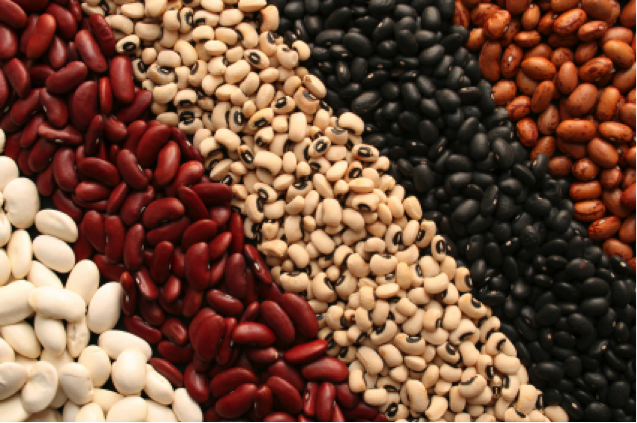
Beans are the secret way to add lean protein, fiber, nutrients and FLAVOR to your diet without adding saturated fat, found in many meats. If you are trying to limit your meat intake while being an athlete, beans are your friend! As a California girl, I love Mexican food, and you can use healthy bean options to make that cuisine an athlete-friendly option.
Quick recipes:
Fat-free refried or whole canned black beans, low-fat cheese, shredded chicken breast, salsa, and a big pile of spinach or shredded lettuce makes a delicious and healthy Mexican salad.
Plunking rehydrated or canned black beans, kidney beans, and pinto beans, a can of stewed tomatoes, some browned lean ground beef and onions, spices, and beef stock into the slow cooker all day yields a delicious superfood chili with leftovers you can freeze in single-serves and bring to work for lunch.
Rower Power Food: Greens
Whether you eat them straight, juice them, wilt them, or bake them into chip form, leafy greens (my favorites are spinach and kale) are unbelievably good for you. In fact, they get the highest scores of anything we eat on the ANDI guide! Besides great nutrition, greens also provide a great source of fiber. Shooting for at least two big servings of these a day is a great way to help boost your systems across the board.
Quick Recipes:
Switch out your regular sandwich bread for lettuce or kale wraps.
Try a green juice blend of kale, carrots, spinach, a green apple, and a little ginger. It’s a lot less sweet than the smoothies you can buy off the shelf, but it’s yummy and has a ton more nutrients!
Rower Power Food: Milk
Milk has recently gotten an undeserved bad rap. Yes, we can turn it into ice cream, butter or Brie cheese, but on its own, low-fat or non-fat milk is an awesome power food. Likewise, Greek yogurt (the low or fat-free varieties with no or little added sugar, like plain or some vanillas) and low-fat cheese can be great tools for getting enough protein without a lot of crazy extras. And chocolate milk remains one of the best recovery nutrition tools you can buy in your grocery store.
Quick recipes:
Try plain Greek yogurt with berries, a ripe banana, almonds, and/or gluten-free oats. Try making your own version of Bircher Muesli, a popular European breakfast.
A glass of low-fat milk with a handful of almonds or a banana is a great pre-workout or for when the afternoon drag hits in the office!
Fueling smart lets you keep training hard. Eat to win!